
-
NILT launches the self-instructional course “Fracophonie et mobilité étudiante”
 The Institutional Center for Languages and Translation (NILT/SINTER) announces that registrations are open for the course “Francophonie et mobilité étudiante” [Francophony and student mobility], to be held in a self-instructional online format. Register here until 30 October.
The course will address the following questions: What is francophony? How far does the French language go? What are the different university models?
The classes are targeted at students, faculty members and administrative staff interested in undertaking mobility in one of the French-speaking countries. The aim is for participants to establish their first contact with French culture and become familiar with the francophone university education system. A B1-level proficiency in French is required for this course.
The course totals eight hours and will remain open from 31 October to 30 November.
-
Second Webinar on the SciVal (Elsevier) Platform
 The Office of International Relations (SINTER), the Prorectorate for Research and Innovation (PROPESQ) and the Prorectorate for Graduate Studies (PROPG) will promote a second online meeting to answer questions about the trial period of the SciVal (Elsevier) Platform, aimed at UFSC staff members, with the attendance of a representative of Elsevier. The webinar will take place on 24 October, at 1 p.m., via the Zoom platform. Click here to register.
The free 30-day trial access to the platform has been available to the entire UFSC university community since 3 October 2022. The aim is to evaluate the relevance of obtaining access to the Elsevier’s SciVal database and its application to the university. Sci-Val is a modular platform that presents a series of research metrics based on data from the SCOPUS database. Hiring Elsevier’s services will depend on the positive evaluation from the university community. Thus, the participation of everyone is essential to guide the decision.
-
UFSC staff member visits Argentina through AUGM program

The staff member Graziele Ventura in front of the UNL Rectorate building.
The staff member Graziele Ventura Koerich Rodrigues visited the Universidade Del Litoral (UNL) in Santa Fe, Argentina, through the Escala Gestores y Administradores program of the Asociación de Universidades Grupo Montevideo [Association of Montevideo Group Universities] (AUGM). Ms. Rodrigues was selected in a Call for Applications in 2019. However, due to the lack of resources that year, she only carried out the mobility in 2022. Check below her report:
“The photos in this post summarize what I lived on 26, 27, 28, and 29 September at the Universidade Del Litoral (UNL) in Santa Fe, Argentina. The Escala Gestores y Administradores program of AUGM surely fulfills its function of strengthening the university management and administration, contributing to their development, and increasing the understanding of the different organizational structures. The visit provided me with a rich exchange of experiences and procedures concerning the activities carried out at UFSC and UNL. I thank UFSC and SINTER for their support and trust. I thank UCL for the reception, hospitality and kindness”.
Click here to learn more about the AUGM programs.


-
SINTER offers mini-course on internationalization of higher education at 2022 SEPEX
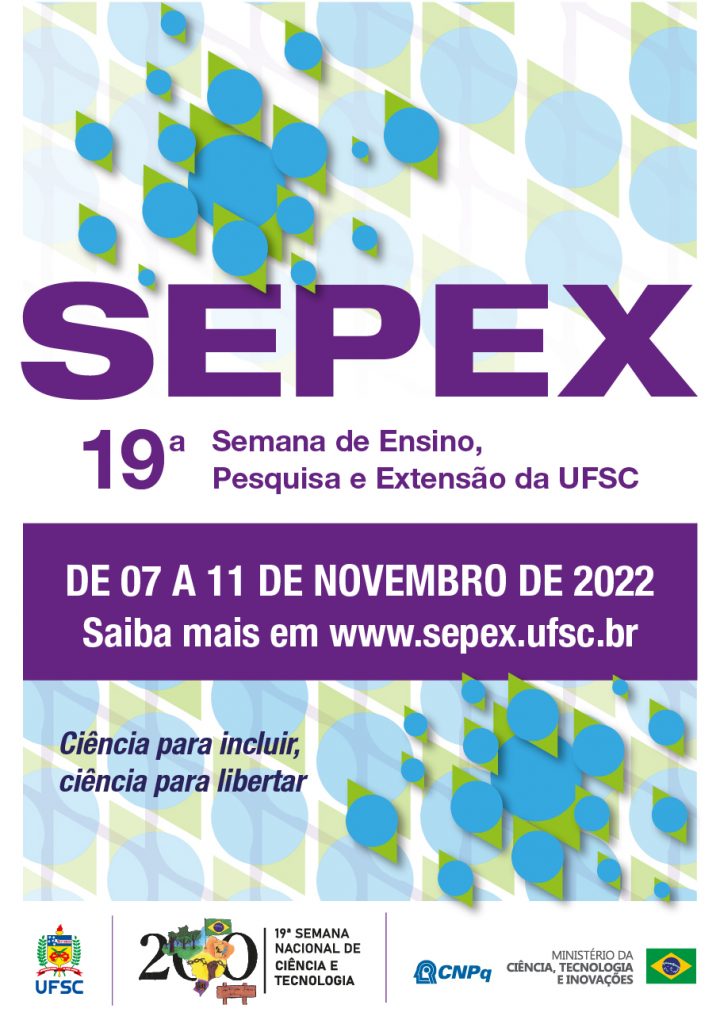 The Office of International Relations (SINTER) promotes the mini-course “Internacionalização da educação superior aplicada à UFSC: teoria e prática” [Internationalization of higher education applied to UFSC: theory and practice] in the 19th UFSC Teaching, Research, Outreach and Innovation Week (2022 SEPEX). The conference will be held online on 9 November 2022, from 2 p.m. to 6 p.m.
The course is targeted at undergraduate and graduate students, faculty and technical and administrative staff members. Its aim is to introduce the main concepts of internationalization of higher education, seeking the reflection on this phenomenon and its application in the context of the management of a Brazilian public university, in addition to presenting SINTER and its main programs.
Check below the course content:
- Internationalization of higher education as a phenomenon and process – Concepts and dimensions of internationalization – Opportunities and dilemmas/contradictions of internationalization – University rankings;
- Internationalization of higher education in Brazil – Analysis of recent developments in the internationalization of Brazilian higher education, based on the main government programs directed to fund this process from 2011 onwards: Ciência sem Fronteiras [Science without Borders][CsF), Idiomas sem Fronterias [Languages without Borders] (IsF) and the Programa Institucional de Internacionalização [Institutional Internationalization Program] (Capes – Print) – The Brazilian Association for International Education (FAUBAI);
- UFSC internationalization – The Office of International Relations (SINTER)
Registrations will open soon.
-
International Virtual Exchange brings together students from UFSC Araranguá Campus and Chile
A virtual exchange experience will bring together undergraduate students from the Energy Engineering program of the Araranguá Campus at UFSC and students from the Tourism and Hospitality program of the Conception and Santiago Campuses at the Instituto Profesional de la Fundacion Duoc UC. Professors Kátia Magruga (UFSC) and Patricia Medina (Duoc UC) have planned mini-courses linked to the Entrepreneurship in Energy Engineering and Energy Efficiency and Management courses at UFSC and the Portuguese Language course at Duoc UC.
The courses will take place for three weeks, between the end of October and the first half of November, and will include synchronous and asynchronous activities. Their main objective is to provide a space for intercultural exchanges and the practice of teamwork in an interdisciplinary and international way.
For each of the mini-courses, two secondary education teachers from the Araranguá region were invited. Based on the experiences and the evaluation, it is expected that new virtual exchanges can be carried out through the partnership between UFSC and foreign educational institutions. Furthermore, the expectation is that this type of exchange inspires similar projects in schools in Santa Catarina through the participation of secondary education teachers.
The international virtual exchange activities and the Collaborative Online International Learning (COIL) program at UFSC are coordinated by professor Kátia Madruga and the Office of International Relations (SINTER).
-
Secretary for International Relations at UFSC visits Univesitat Oberta de Catalunya

The administrative building of the Universitat Oberta de Catalunya.
The Universitat Oberta de Catalunya [Open University of Catalonia] (UOC) is a private university dedicated to distance learning, based in Barcelona, Spain. It is the world’s first university with a virtual campus.
The Secretary for International Relations at UFSC, Prof. Luiz Carlos Pinheiro Machado Filho, visited UOC and gave us this report:
“As I was registered to participate in the 32nd European Association for International Education (EAIE) Conference and Exhibition, I thought it was important to get to know a university in Catalonia as part of the “Campus Experience” activity. The university with the name Universitat Oberta de Catalunya (UOC) caught my attention, but what really surprised me was the meaning of “Open”. The name, for them, means that the student does not need to be present at the university. Thus, I got to know the first completely online university, founded in 1995. It was an interesting and unexpected experience.
This university has been growing year by year and in the period 2019-2020 had over 70 thousand students from 142 countries enrolled in undergraduate and graduate programs, 478 permanent faculty members and 5300 collaborating faculty members, in addition to 667 administrative staff members. The practical classes, when needed, take place in other institutions located where the student is residing.
The pandemic forced us to undertake remote learning, and it certainly opened up the debate on online learning, which is very different from offering remote classes. At UFSC, we call distance learning (EaD) what others call online programs. It uses other teaching and learning methodologies that depend a lot on the students and their motivation. There are positive and negative aspects. It seems to me that the positive aspects include the fact that education is made possible for those who work, have a family, or cannot afford to live in the city where the university is based. From this perspective, it is inclusive, providing study opportunities for those who otherwise would not have them. In fact, the age group of UOC students is mostly above 30 years old. On the other hand, there is the very negative aspect of the student not experiencing the university and its daily life, not socializing, not knowing their colleagues and professors, and having to learn always through the cold contact of a computer screen. Online learning is there, and it is up to us (UFSC) to assess its relevance, utility and opportunity”.
-
UFSC is represented in the 32nd European Association for International Education Conference and Exhibition

This year, the 32nd Annual EAIE Conference and Exhibition gathered more than 6,300 university representatives from all over the world.
The Universidade Federal de Santa Catarina (UFSC) was represented at the 32nd Annual European Association for International Education (EAIE) Conference and Exhibition by the Secretary for International Relations, Prof. Luiz Carlos Pinheiro Machado Filho. The EAIE Conference, which took place between 13 and 16 September in Barcelona, Spain, is the largest and most important European event on higher education. In the event, European universities and several universities from other continents come together. The presence in the event has brought to UFSC international visibility in a privileged space to create a network, strengthen partnerships and establish cooperation agreements. UFSC participated together with 19 Brazilian universities in the stand of the Brazilian Association for International Education (FAUBAI).
Throughout the conference, UFSC established contact with several institutions, such as: the Associação das Universidades de Língua Portuguesa [Association of Portuguese Language Universities] (AULP), to receive students from Portuguese-speaking universities, especially from Africa; the new Université Grenoble Alpes (UGA) and INP, in France, to renew student mobility agreements and double-degree agreements; the University of Oulu, in Finland, for student mobility in the areas of Information, Technology and Electrical Engineering; the Universidad EIA in Medellin, Colombia, for discussion of a double-degree agreement in the area of Automotive Engineering; the National University of Arts in Bucharest, Romania, which announced their annual festival; and the Universidad de Guadalajara, in Mexico, for a possible extension of cooperation agreements.

Brazilian institutions that were present in the event, at the FAUBAI stand.
During the conference, the Brazilian consul in Barcelona, Mr. Clemente Baena Soares, visited the FAUBAI stand to honor the Brazilian delegation. The delegation members reinforced to him the importance of MEC investing in the international visibility of the Brazilian universities. This year, there was no government support for the stand. UFSC had good visibility at the conference and remains a university highly sought-after by many international partners, as a result of the quality of the academic work of our university community.
(Português (Brasil)) Horário de Verão: clique e saiba mais!
(Português (Brasil)) 
Telework

To Incoming Students
Catalogue of Outreach Projects for Volunteer Participation

Ways to Join UFSC – International Admissions

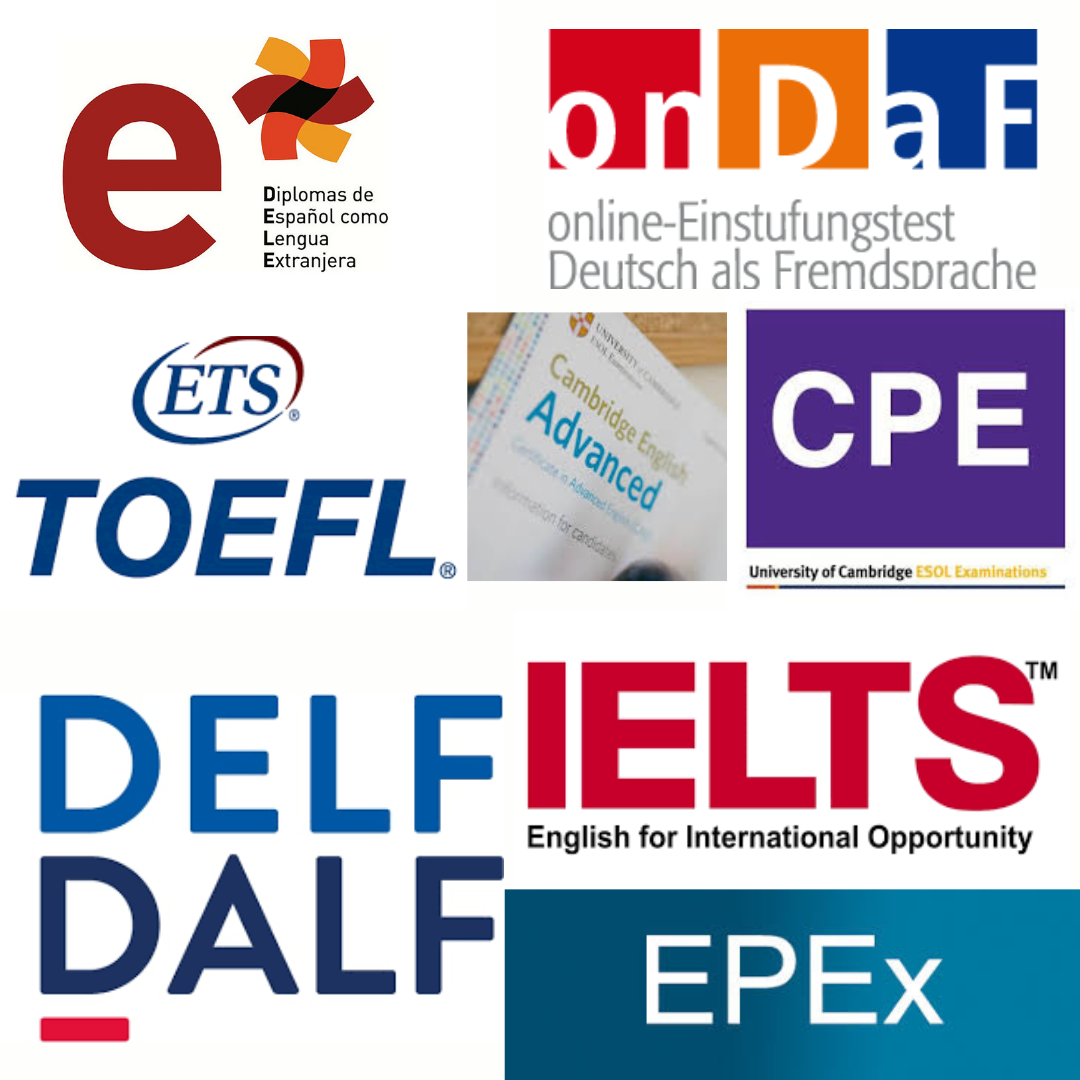
Language Proficiency Tests
Catalogue of Courses offered in Foreign Languages
Receive SINTER opportunities by e-mail

PEC-G

SINTEGRA

Contact
Recepção / Reception desk:
+55 (48) 3721-6406
Horário de atendimento da SINTER / Office hours (open to the public):
Das 10h às 16h / 10 a.m. - 4 p.m.
Equipe e Contatos - Contact and Staff

