UFSC abre inscrições para processo seletivo voltado a pessoas refugiadas e portadoras de visto humanitário em 2026


 A Universidade Federal de Santa Catarina (UFSC), por meio da Comissão Permanente do Vestibular da UFSC (Coperve), abriu inscrições para o processo seletivo destinado a pessoas refugiadas, solicitantes de refúgio de baixa renda e portadoras de visto humanitário. As vagas são para ingresso no segundo semestre letivo de 2026.
As inscrições são gratuitas e devem ser realizadas exclusivamente pelo site www.refugiados2026.ufsc.br, até o dia 14 de maio de 2026.
Para participar, é necessário informar CPF e documento oficial com foto. A confirmação preliminar da inscrição estará disponível a partir de 19 de maio, e a definitiva, com local de prova, até 9 de junho, no site do processo seletivo.
O processo seletivo oferece 10 vagas remanescentes de cursos de graduação da UFSC, oriundas do Vestibular Unificado e do Sistema de Seleção Unificada (SiSU) 2026. A classificação será geral, respeitando o limite de uma vaga por curso.
A seleção será realizada no dia 28 de junho de 2026, das 10h às 12h, por meio de prova de redação, redigida exclusivamente em Língua Portuguesa. É obrigatória a apresentação de documento oficial com foto.
A iniciativa integra as políticas de ações afirmativas da UFSC e tem como objetivo ampliar o acesso ao ensino superior público para populações em situação de vulnerabilidade social e migratória.
 O Comitê Intersetorial Permanente de Atenção Psicossocial e Promoção de Saúde (CIPAPP) criou o Acolhe UFSC, um espaço dedicado à promoção da saúde mental e ao cuidado com a comunidade universitária.
 Estudantes imigrantes que vivem a experiência de estudar fora do seu país agora contam com um novo espaço de escuta e acolhimento. O projeto Ateliê dos Sonhos está com inscrições abertas até o dia 10 de abril, oferecendo um ambiente seguro para compartilhar vivências e desafios.
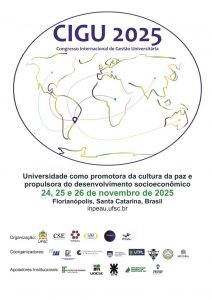 O XXIV Congresso Internacional de Gestão Universitária (CIGU 2025), organizado pelo Instituto de Pesquisas e Estudos em Administração Universitária (INPEAU) da UFSC, em parceria com universidades latino-americanas, acontecerá nos dias 24, 25 e 26 de novembro de 2025. O tema central do evento neste ano será “Universidade como promotora da cultura da paz e propulsora do desenvolvimento socioeconômico”.
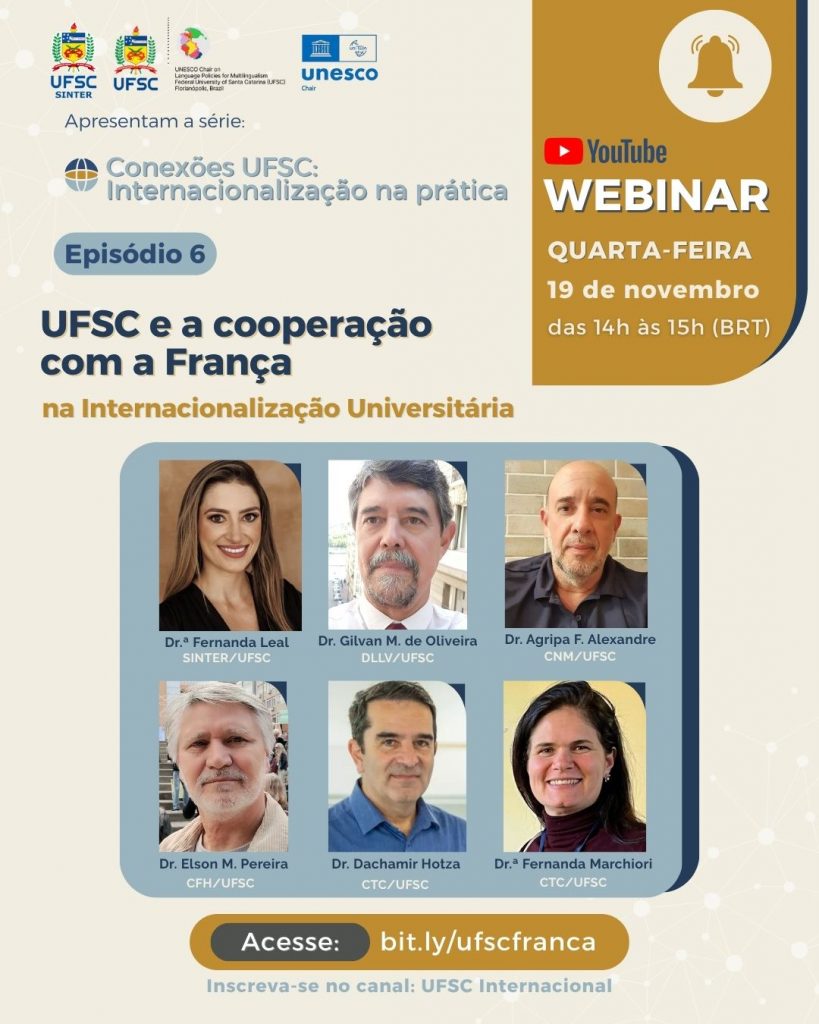 O sexto episódio do webinário “Conexões UFSC: Internacionalização na prática” acontecerá ao vivo no dia 19 de novembro de 2025, quarta-feira, às 14 horas, e terá como tema “